
Novoads AI Video & Image Ad Skill Pack (agent-skills)
AI video and image ads for marketers, built in Claude Code or Cursor and priced by a live estimate first.



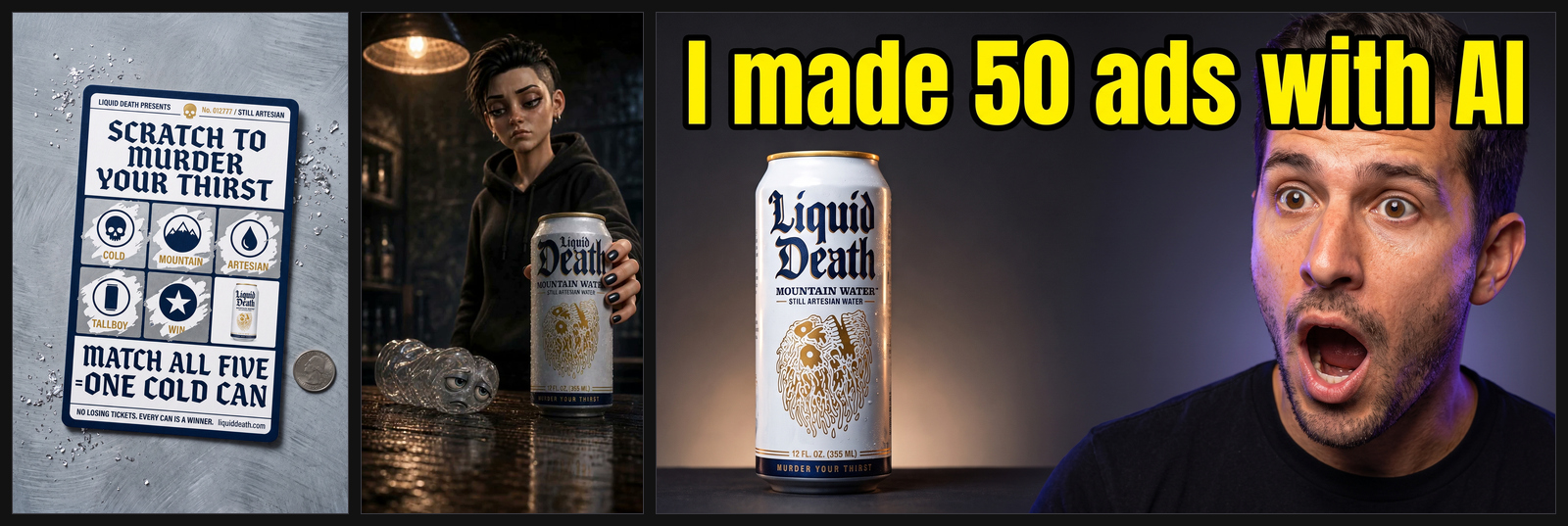
Every image and video in this README was generated by the skills in this repo, through the API, with the asks shown beside them.
Make AI video ads and static image ads from Claude Code or Cursor, against your own Novoads account. The agent does the mechanical part — upload, price, generate, poll, download — and the skills carry the part that decides whether the render is any good: the prompt.
In Claude Code or Cursor, open a new empty folder and paste:
https://github.com/novoads/agent-skills help me set this up
The agent clones this repo, runs ./scripts/setup.sh, and stops at the one step only you
can do: pasting your Novoads API key.
Need an account? The entry offer is a $1 trial — not a free tier, and it can generate through the API like any other live plan: novoads.ai
See what it makes · Get started · What you can make · Models · Costs · Security · Support · License
Twelve skills, plus the shared steps they call, make the ad and the things around it. The generated creative runs on nine models, six for video and three for stills: UGC video, static Meta creatives, Pixar and claymation storyboards, and YouTube thumbnails. The narrator voice-over, a replacement voice for an ad already made, a music bed, burned-in captions, a competitor swipe file and a paused Meta ad come from their own endpoints and APIs instead.
Two rules run through the whole pack, and they are the reason it is safe to point an agent at a billing API:
- No price is ever quoted from memory. Every credit number comes from a live
POST /v1/estimatescall in the session that is about to spend, shown to you and approved first. That call is free, and there is no rate table anywhere in this repo to fall back on. - The spoken line is approved on its own, before the cost gate. Seedance renders the dialogue and the lip-sync in the same call, so the sentence in the prompt is the sentence in the finished ad. Approving a concept is not approving a sentence, and approving a sentence is not approving a spend.
Two more things worth knowing before your first render. The prompt formulas build on the model vendors' own published guides from ByteDance, Google DeepMind, Google Cloud and OpenAI, scoped to what this API actually exposes (vendor prompting guides). And every Meta ad this pack publishes is created PAUSED, so nothing goes live without you (security).
Claude and Claude Code are products of Anthropic. This is an independent skill pack built by Novoads for Claude Code; it is not affiliated with or endorsed by Anthropic.
Get started (5 minutes)
You need a POSIX shell (macOS or Linux; WSL2 or Git Bash on Windows), plus curl, jq and
a Novoads API key. Everything else is per-workflow.
A Novoads API key, and a shell. The key is not optional and nothing in this
repo substitutes for it: every skill here runs one executable path, curl
against https://api.novoads.ai/v1 with NOVOADS_API_KEY from .env. Create
one at novoads.ai/dashboard/settings?tab=api.
Beyond the key, the core workflow (upload a photo, price it, generate a
video or an image, poll, download) is plain HTTP driven by your agent.
curl and jq are enough, and both are already on most machines. Your
first ad needs nothing from the optional table.
| Tool | Needed for | Install (macOS) |
|---|---|---|
curl + jq |
Everything on the API: uploads, estimates, generation, polling, download | preinstalled / brew install jq |
| Python 3.10+ | The Python-driven steps, including the image-ad callers (chatgpt-image-ad, nano-banana-image-ad, clone-image-ad) and the competitor sweep (spy-competitor-ads). Stdlib only, nothing to pip install |
preinstalled or brew install [email protected] |
ffmpeg |
Only the steps that assemble or edit video on your machine: the storyboard ads (pixar-ad, claymation-ad, both of which assemble locally at every length), the local post steps (music-mix, broll-overlay), and frame extraction in analyze-video. Every core API workflow needs nothing |
brew install ffmpeg |
Captions, transcripts and music are generated server-side and need no local
tools: POST /v1/captions burns captions in (30 presets), POST /v1/transcripts
returns text, word timings and an SRT, and POST /v1/music generates the
soundtrack. Only laying that soundtrack under a finished cut is local, and that
is the music-mix step in the ffmpeg row above.
Optional, per workflow. Each skill tells you when it needs one; nothing here blocks your first ad:
| Tool | Only if you | Install |
|---|---|---|
| Meta publishing deps | publish finished creatives to the Meta Marketing API (meta-ad-builder) |
pip install -r shared/skills/meta-ad-builder/scripts/requirements.txt |
Node.js + whisper |
use the manual caption path instead of POST /v1/captions: a style outside the 30 presets, or hand-editing the wording before burn-in |
brew install node; pip install openai-whisper plus a model download (the binary alone returns an EMPTY transcript, not an error) |
Linux: apt install curl jq ffmpeg python3. Windows: WSL2 or Git Bash;
the skills here are shell scripts and curl calls, so they need a POSIX shell.
No shell at all? See Environments that cannot run this repo at the bottom.
Fastest path: in Claude Code or Cursor, open a new empty folder and paste this, and the agent clones the repo, runs setup, and stops at your API key.
https://github.com/novoads/agent-skills help me set this up
Prefer the terminal? The same setup the pasted prompt above runs, by hand:
1. Clone
git clone https://github.com/novoads/agent-skills.git
cd agent-skills
2. Run setup
./scripts/setup.sh
It creates .env (chmod 600), asks for your API key, and validates the key against
GET /v1/models before writing it to disk — a key that has never been probed is the most
expensive thing to debug later. It then copies MASTER_CONTEXT.template.md to your personal
MASTER_CONTEXT.md, syncs the skills, and runs the connectivity check.
Your key looks like novo_ followed by 64 hex characters. Create one at
novoads.ai/dashboard/settings?tab=api — it is
shown once, at creation, and cannot be retrieved afterwards.
Setup never hangs an agent: with no TTY (or with --non-interactive) it prompts for nothing,
prepares the workspace, prints the one step left for a human, and exits 0.
Re-check connectivity any time with ./scripts/check-novoads-env.sh. It tells you which failure
you have: a 401 is a bad or revoked key, a 403 with plan_required is a good key on an account
without API access. Different problems, different fixes.
Steps 3 and 4 are the same whichever way you installed, pasted prompt or terminal.
3. Open in your editor
Claude Code: open the folder. A SessionStart hook syncs the skills and prints a banner —
which skills are installed, whether .env and MASTER_CONTEXT.md are set up, and the reminder
that prices come from /v1/estimates.
Cursor: open the folder. The same skills are exposed at .cursor/skills/.
4. Ask for something
Drop a product photo into references/products/ and say what you want. The agent picks the route,
reads the matching prompt formula, prices it, confirms the dialogue, and generates. The first time
you ask for an ad it asks what your product is and saves the answer to MASTER_CONTEXT.md, so no
later session asks again — setup itself never asks; the only thing setup needs from you is the key.
See what it makes
Everything below was made by this pack in one run on 2026-08-11/12, through the same skills a customer installs. Each item shows the exact ask typed to the agent and the prompt the skill wrote from it. The prompt panels are wrapped for width, and the long ones stop after their opening blocks and name their full length.
Demonstration creative for a real product; not commissioned by or affiliated with the brand.
| What | Watch | The ask, and the prompt the skill wrote |
|---|---|---|
| Pixar-style storyboard ad. A cast sheet, four beat stills, one clip per beat, voice-over into the gaps, a music bed and captions, assembled locally.Made with pixar-ad.Rendered 2026-08-12 UTC. Demo creative. | You type: Make a Pixar-style animated ad for Liquid Death — the villain is a sad crumpled plastic bottle. Play it as dark comedy, not eco-preaching.The prompt the skill wrote3D animated film look, vertical 9:16, animating the character in thereference image. crushed unlabeled bottle, a clear plastic water bottlestamped flat and concertinaed along its length, lying on its side inhard ribbed folds, cap gone, two oversized half-lidded eyes and a smalldownturned mouth set into the rounded end, wrecked and never intact, nolabel and no printed text anywhere on it, lying in a shallow gutterpuddle of black rainwater on wet asphalt at night under one amber streetlamp.From zero to one and a half seconds the bottle sags deeper into thepuddle and its eyes blink once, slowly. From one and a half to fourseconds the eyes lift to camera and the bottle says, flat and defeated:"I've been in a cupholder since March." Small mouth shapes match thesyllables and the eyebrows lift on the last word.Camera: locked extreme close-up macro, very subtle handheld micro-drift,no zoom, no pan.Stylized 3D animated feature film look, hard directional light with deepfalloff, cold palette of wet asphalt grey, gunmetal blue, bone white andtarnished gold, painterly soft-focus background, desaturated colourgrade with crushed blacks, every character caught mid-emotion.Audio: a small flat defeated male voice, close-mic and hollow, faintrain behind it. No other speech in this shot.The bottle is unchanged from the reference image: same crush creases,same eye placement. Exactly one bottle in frame. no live-action footage,no photorealistic humans, no uncanny faces, no dead eyes, no animestyle, no 2D cel-shaded look, no named or copyrighted animated filmcharacters, no morphing between frames, no on-screen text, no subtitles,no captions[beat 1 clip prompt, one of five. 1,677 characters, shown whole.] |
|
Static ad to motion. One finished still, one call: the coin scratches the foil and the reveal happens while every printed word stays frozen.Made with image-to-motion.Rendered 2026-08-12 UTC. Demo creative.Rendered on seedance-2.0: on this run seedance-2.5 refused every start image it was sent, six calls, each charged and then refunded, while the same still went through on seedance-2.0. |
You type: Animate this scratch-off ticket ad — a coin scratches the foil and the reveal happens. Every word stays frozen.The prompt the skill wroteLocked-off overhead flat-lay of a printed Liquid Death scratch-offticket on grey painted concrete, a US quarter resting flat beside itslower-right corner. Photographic, not illustrated. A silent motiongraphic with no spoken dialogue, no voice-over and no music.CAMERA: the camera is locked off and never moves: no pan, no tilt, nozoom, no push-in, no orbit, no drift. Lighting is constant: same softkey, same soft shadows, no light sweep, no flicker, no exposure change.The reference image is the exact composed state: every colour, shadow,layout position and printed glyph matches it precisely. Framing keepsthe ticket and coin at their exact positions and relative sizes; nothingon the ticket is cropped or re-laid out. The ticket never moves, shifts,rotates, bends or lifts.TEXT: all printed text stays perfectly intact and pixel-identical to thereference at every frame, same faces, weights, sizes, navy and goldcolours and positions, correctly spelled: "LIQUID DEATH PRESENTS", "No.012777 / STILL ARTESIAN", "SCRATCH TO MURDER YOUR THIRST", "COLD","MOUNTAIN", "ARTESIAN", "TALLBOY", "WIN", "MATCH ALL FIVE = ONE COLDCAN", "NO LOSING TICKETS. EVERY CAN IS A WINNER.", "liquiddeath.com",and on the small can photograph "Liquid Death" and "MOUNTAIN WATER".Text is never redrawn, re-lettered, re-spaced or re-coloured, and neverfades, scales, slides or animates. The gold skull, the five navy iconsand the can photograph are likewise pixel-identical and never redrawn.… 3,962 characters total |
|
| Claymation ad. A five-beat clay short: cast sheet, per-beat stills, per-beat clips, voice-over, music bed, a composited end card, captions burned locally.Made with claymation-ad.Rendered 2026-08-12 UTC. Demo creative. | You type: Make a claymation ad for Liquid Death — a bored office worker's grey day until the can shows up. No eco talk.The prompt the skill wroteHand-sculpted stop-motion clay look. Plasticine characters with visiblefingerprint impressions and sculpting-tool marks, matte clay surfaceswith subtle micro-bumps, slightly asymmetric features, painted-on orsculpted eyebrows. Real knit-fabric clothing with visible wool weave andstitch lines, wooden and ceramic miniature-set props with hand-paintedfinishes. Practical miniature-set interior lighting, shallow macro depthof field, soft photographic bokeh. Subtle imperfection in every surface.Vertical 9:16 composition.Vertical 9:16, animating the character in the reference image. grey woolcardigan Frank, a man in his late 50s with thinning side-parted slate-grey plasticine hair in carved ribbon-strands and an oversized sculptednose, stands in a miniature clay office cubicle set with grey feltpartition walls in visible fibre texture, a hand-painted wooden desk inflat grey, a chunky beige clay desktop computer, a wire tray of hand-cutpaper, a hand-thrown ceramic mug and a small clay desk lamp facingcamera, the set behind him in saturated hand-painted colour.From zero to six seconds a small closed-mouth smile arrives on his faceand he lifts the tall Liquid Death can to chest height with the labeltoward camera, one unhurried gesture.Camera: locked medium shot at chest height, very subtle handheld micro-drift, no pan, no zoom. The desk surface fills the lower third of theframe and stays clear of props throughout, fully rendered to the bottomedge of the frame.… beat 5 clip prompt, one of five. 3,807 characters total |
|
| UGC selfie ad. One 15-second Seedance call: four jump cuts, and the spoken script and its lip-sync rendered in the same call as the picture.Made with novoads-api.Rendered 2026-08-12 UTC. Demo creative. | You type: Make a 15-second UGC video ad for Liquid Death — a woman in her kitchen explains why she switched. Match Liquid Death's brand voice.The prompt the skill wrote15 seconds UGC style honest review video, filmed on smartphone at arm'slength, grey morning light through the kitchen window blinds, casualhandheld selfie angle framed tight from the chest up. Grey hoodie woman:late 20s, dark hair in a messy claw clip, natural skin with visiblepores across her nose and slight undereye shadows, wearing a plainunprinted grey hoodie with no writing or graphic on it. Her smallapartment kitchen, close behind her and mostly out of focus — a plainwhite coffee mug, a wooden cutting board with a cut lime, a dish rack ofclean plates. The setting stays the same throughout: the same kitchencounter, the window blinds as the only light source, the same plain greyhoodie and the same claw clip. Only the framing changes between cuts,and every cut stays close — her head and shoulders fill the frame andthe can is never further from the lens than her own face.The video opens on a tight chest-up selfie framing — grey hoodie womanlooking flatly into the lens, holding the @Image1 tall white and navyLiquid Death mountain water can up beside her chin, close to the camera:"I switched to water. My family staged an intervention."Quick jump cut — grey hoodie woman closer still, the @Image1 can fillinghalf the frame height with its front face square to the lens: "It'scalled Liquid Death. It's water. Terrifying."Quick jump cut to a tight framing — grey hoodie woman takes one flatunimpressed sip from the @Image1 can, the can still large in frame:"Tastes like water. That's the whole review."Quick jump cut — grey hoodie woman holds the @Image1 can up beside herface, both filling the frame: "Murder your thirst. Or don't. Whatever."… 3,404 characters total |
|
| Clone of an existing ad. One of our own skincare ads read locally with ffmpeg and Whisper, then rebuilt for a different product. The clip plays source left, clone right.Made with clone-video-ad.Rendered 2026-08-12 UTC. Demo creative. | You type: Clone this video ad for Liquid Death: references/sources/our-own-ugc-ad-source.mp4The prompt the skill wroteHandheld selfie take on a phone in one hand, one unbroken take, no cuts,framing drifting as her arm moves. A woman in her late twenties, dampdark hair half pulled back, bare face, visible pores, freckles acrossher nose, white waffle bathrobe, bright bathroom, mirror behind her,blown-out window at camera-left.[00:00] Chest-up, she looks into the lens, flat little smile, and says:"Okay, my thirst has genuinely never been this dead."[00:04] She raises the @Image1 tallboy can into frame beside her jaw andsays: "Just finished my morning water and I'm kind of obsessed."[00:07] She slowly turns the can toward the lens, front label to camera,and says: "Nothing sweet, nothing added, just water and aluminum."[00:10] She takes one slow sip and lowers the can to her collarbone,saying: "Honestly, it's the only thing in my routine that isn't lying tome."[00:13] Back to chest-up, the can still at her collarbone, deadpan half-smile, she says: "All right, ready to murder some thirst."The can from @Image1 stays visually unchanged in every shot, its labelsharp and identical to the reference image, its text unchanged and fullylegible, with no extra words, numbers or lettering anywhere on the can.Robe and damp hair unchanged throughout. The tone is dry, warm and flat;she talks quickly, running sentences together like a voice note, everyword landing clearly. Documentary handheld, photorealistic, naturalphone quality, no colour grading, one side of her face in shadow, sounddirect from the phone mic, room echo. Vertical 9:16.[1,555 characters, shown whole.] |
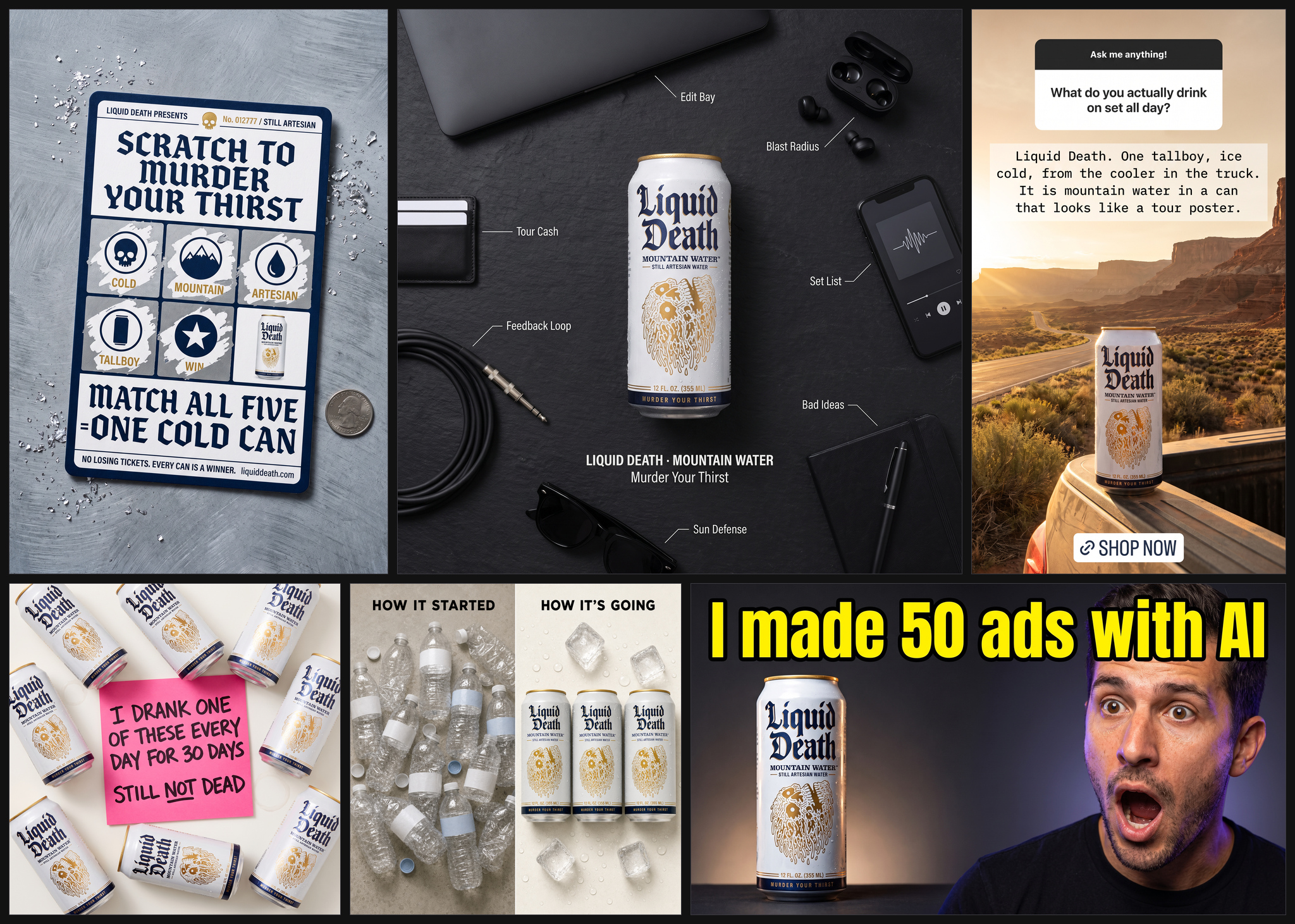
Five templates from the 40-template library, plus a thumbnail, on one sheet: scratch ticket, desk-kit flatlay, 9:16 story hero, sticky-note flatlay, before/after split, and a reaction thumbnail from generate-youtube-thumbnail.
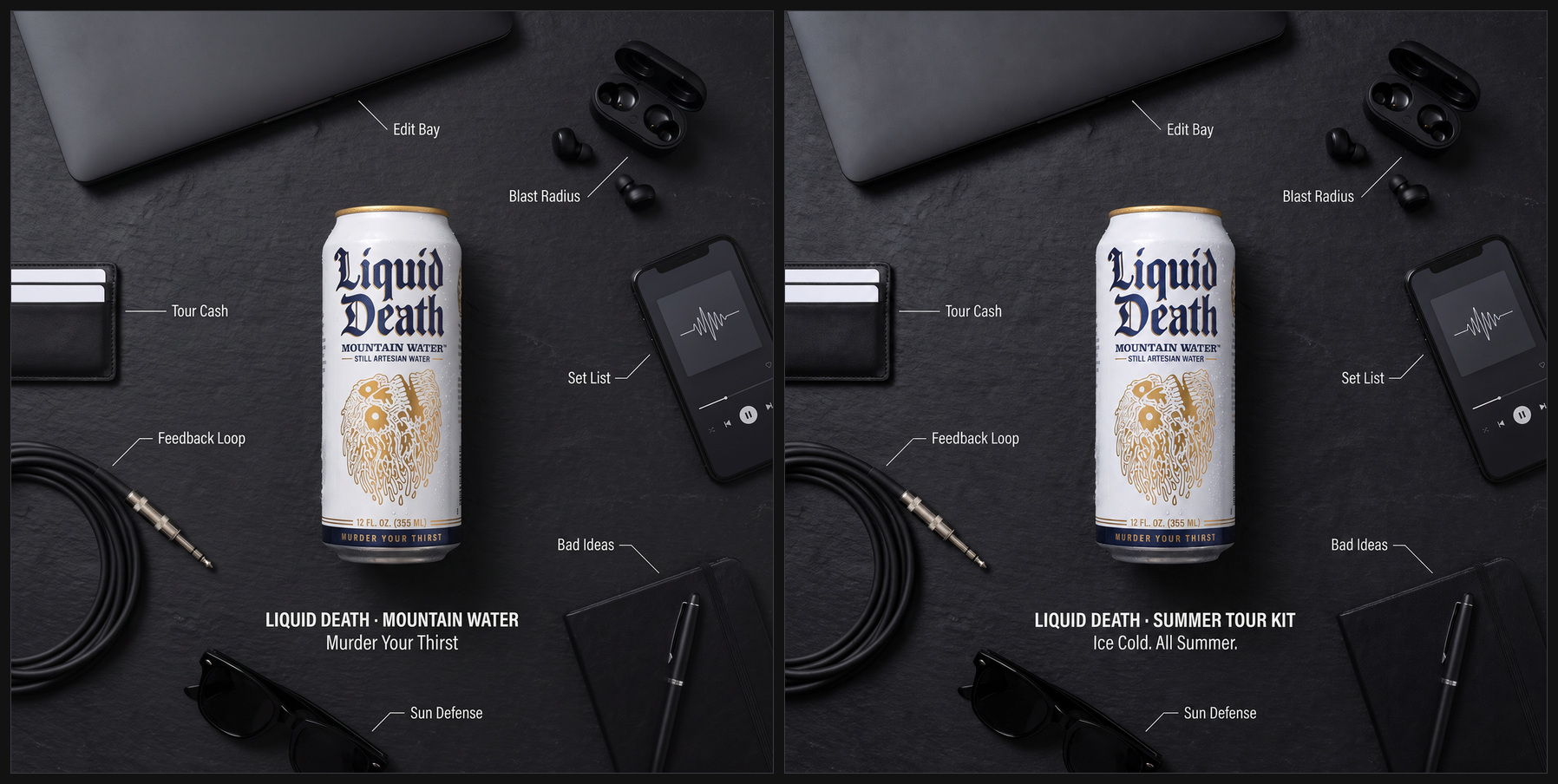
The pair demonstrates the edit endpoint: the same image sent back with sourceAssetId, one new
headline, and nothing else moved.
The pack prices before it spends: POST /v1/estimates first, the number shown, the render only
after that number is approved. This is what one of those moments looks like, captured on 2026-08-11
before the UGC row's 720p render. A dated capture, not a rate table.
{
  "capturedAt": "2026-08-11",
  "endpoint": "POST https://api.novoads.ai/v1/estimates",
  "apiSpecVersion": "2.19.0",
  "httpStatus": 200,
  "request": {
    "kind": "video",
    "model": "seedance-2.0",
    "durationSeconds": 15,
    "resolution": "720p",
    "language": "en",
    "prompt": "15 seconds UGC style honest review video, filmed on smartphone, grey morning light through the kitchen window blinds, casual handheld selfie angle. … (2,646 characters)"
  },
  "response": {
    "credits": 7,
    "balance": 243.2,
    "sufficient": true
  },
  "responseHeaders": {
    "x-request-id": "f8f1379240ff64680b8263fa8d5559b3"
  }
}
credits and balance are display credits, the same unit POST /v1/videos reports back as
creditsCharged. The prompt is abridged here for width; the call carried it in full.
What you can make
🎬 Seedance 2.0 video — the flagship
Any integer duration from 4 to 15 seconds, six aspect ratios, native audio and lip-sync
rendered in the same call. Start from one photo (startImageAssetId animates it as the first
frame) or composite up to nine reference images (referenceAssetIds, addressed in the prompt
as @Image1…@ImageN). Those are two separate modes — a request carrying both is rejected.
Five prompt formulas ship, each with a worked example that has been priced live:
| Formula | For | File |
|---|---|---|
| UGC selfie review | A person talking to camera about the product | seedance-2-ugc.md |
| Premium reveal | Dark void, text narrative, no person | seedance-2-premium-reveal.md |
| Product hero | Splash, mist, light rays, slow rotation | seedance-2-product-hero.md |
| Studio lookbook | Polished multi-look editorial with voiceover | seedance-2-studio-lookbook.md |
| Feature walkthrough | Fast-paced demo cuts, one person held across clips | seedance-2-feature-walkthrough.md |
"Make a 12-second Seedance UGC video — woman in a kitchen holding the product, says she stopped buying the drugstore version"
The platform guide — grids, the two reference modes, prompt length by shot count, the mini-draft tier — is seedance-2.md.
Draft on Mini first. seedance-2.0-mini takes the same grid and the same formulas at half the
price and comes back in 2–3 minutes. Upload once, draft on Mini, re-price naming the final tier,
render once. The agent asks which tier you want before the first Seedance call of a workflow.
🎬 Seedance 2.5 — the long one
Any integer duration from 4 to 30 seconds, which makes it the only model here that renders past
15 in a single call. Everything else is 2.0's shape: the same six aspect ratios, the same nine
referenceAssetIds, the same audioEnabled toggle, the same 4,000-character prompt ceiling — so
the five Seedance formulas apply unchanged.
Two differences worth knowing before you pick it. It renders 480p and 720p only — no
1080p, no 4k, on either provider — so a resolution carried over from a 2.0 workflow is a
rejected request rather than a downgrade. And it is the dearest model on the API at the same
length; thirty seconds of it is the most expensive single call this API takes. Price it, like
everything else, at POST /v1/estimates.
"Make a 30-second Seedance 2.5 ad — the founder walks through the workshop and explains why they built it"
A longer clip wants more beats, not slower delivery. If the script only fills 15 seconds, render
15 seconds on seedance-2.0, which is cheaper at that length.
🎬 Omni Flash — fast vertical clips
"Give me a fast 8-second vertical clip of the product on a kitchen counter, no dialogue"
omni-flash carries a 20,000-character prompt ceiling, the roomiest of any video model here
against 4,000 everywhere else, which is what makes long structured briefs possible. Its grids are narrower than Seedance's — durations 4/6/8/10,
aspect ratios 9:16 or 16:9 only — and it takes no reference images. Prompt craft in
shared/skills/gemini-omni-flash/prompting/guide.md,
which is Google DeepMind's own guide with the parts this API cannot reach marked as such.
🖼️ Stills — people, products, characters
POST /v1/images is synchronous: the finished images come back in the response body, so there
is nothing to poll. Up to 4 images per call; reference images are capped per model — 4 on
gpt-image-2, 14 on nano-banana-pro, 8 on reve-2.1.
gpt-image-2— heavy typography and mimicked UI.nano-banana-pro— photoreal people and products in a scene; holds a character's identity tightest across a reference batch.reve-2.1— a different look on the same still, or a second opinion.
"Create a new AI influencer — 22-year-old with freckles, golden-hour kitchen lighting" · "UGC selfie of Sofia holding the product in her bedroom" · "Recreate this influencer's look from this photo"
Character sheets, influencer recreation, UGC product selfies and product-showcase stills live in skills/novoads-api/prompting/prompt-library/. The standard flow is still-first: generate the still, get it approved, then animate the approved frame on Seedance. Stills are cheap to iterate; video is not.
Every returned image gets a QA look — hands, fingers, faces, merged objects, garbled text. A defect is regenerated with a corrected prompt, capped at 2 retries, and the extra credits are reported at the end.
📸 Static Meta image ads (40-template library)
"Make me an Apple Notes-style ad for my product" · "Generate a Forbes editorial ad" · "Clone this comparison-table ad as a template"
A three-skill family over a shared library of 40 validated prompt templates — Apple Notes lists, editorial hero, fake Google search, comparison tables, sticky-note flatlays, Slack threads, ChatGPT-conversation ads, iMessage screenshots, magazine covers, billboards, museum exhibits, weather UI, scratch-off tickets, founder letters, dating-app cards, and more.
chatgpt-image-ad— typography / UI mimicry, ongpt-image-2nano-banana-image-ad— photoreal / lifestyle / multi-reference, onnano-banana-proclone-image-ad— reverse-engineer an existing ad into a new library entry; asks which backend to validate against at Phase 1 (gpt-image-2,nano-banana-proorreve-2.1) and can cross-validate against another at Phase 8
Read shared/skills/image-ad-prompting/OVERVIEW.md
first — it holds the decision tree, the per-backend aspect-ratio matrix, and the standard
generate / clone workflows. Output is image files; publishing is the separate meta-ad-builder
skill.
🎞️ Multi-step animated pipelines
| Pipeline | Shape | Guide |
|---|---|---|
| Pixar-style 3D animated ad | The storyboard flow, and the only one: a researched product read → cast sheet → per-beat gpt-image-2 stills, each chaining the previous one's assetId to hold the character → seedance-2.0 per beat → POST /v1/voiceovers into the gaps → music bed → captions → local ffmpeg assembly. Carries the genre's beat formulas: an anthropomorphized problem character that speaks the pain in first person, a protagonist reveal, a mascot mechanism-of-action scene, a composited end card. Gated: the board is reviewed before the clips are paid for. Every animated ask routes here, a 15-second one included — there is no single-call tier, so ffmpeg is required |
pixar-ad · formulas in references/formulas.md |
| Claymation / stop-motion clay ad | The 8-beat narrative arc (setup → inciting moment → social validation → quiet despair → clay infographic → discovery → transformation → resolution), a 5-beat short, hand-sculpted clay style lock, per-beat material detail, and a local ffmpeg + Whisper read of a reference video as a second entry for recreating a clay ad you were shown | claymation-ad · formulas in references/formulas.md |
| Still → motion graphic | One seedance-2.5 call off startImageAssetId, where the image you hand over is the shot rather than a reference: motion vocabulary for seven image classes (UI, hero, flat-lay, key art, collage, product, character), a timed-beat prompt template, and the clauses that hold text pixel-identical and pin regions still. The judgement is what moves, in what order, and what is absent at 0.0s |
image-to-motion |
| YouTube thumbnails | 5 CTR formulas (peace-sign branding, real-vs-AI, terminal flow, reaction shock, before/after split) on nano-banana-pro, likeness locked with face references |
generate-youtube-thumbnail |
| Burn captions onto an MP4 | Whisper transcript → reading phrases → captions-only HTML on a transparent background → ffmpeg alpha overlay. The manual caption path, for a style outside the 30 presets or wording you need to hand-correct. Out of band: no API call, no credits | caption-video |
| Overlay b-roll cutaways on a finished MP4 | Whisper transcript → EDL of overlay windows (file, start, end, covers) → validate → ffmpeg overlay → verify duration, audio and every window. Base audio runs untouched, duration never changes. Local ffmpeg, no credits (the cutaway clips themselves are generated first, and those are charged) |
broll-overlay |
| Lay a music bed under a finished MP4 | Track trimmed and faded to the exact cut length, ducked under the voice, picture stream-copied so burned captions survive bit-exact. Mixing is local ffmpeg and free; generating a track is one priced API call on the same key (two tracks per request), or bring your own file | music-mix |
🔄 Reverse-engineer existing creative
"Reverse-engineer this video into a reusable Seedance template" · "Clone this video ad for our product" · "Pull the ads our competitor is running into a swipe file"
- spy-competitor-ads sweeps a competitor's live ads out
of the Meta Ad Library and puts the actual MP4s and JPEGs in a local swipe folder, one sweep per
competitor, priced by a live estimate before anything is charged. Media is pulled the moment the
response lands, because the CDN links expire; the permanent Ad Library URL is what it quotes.
What comes back is ranked on what the Ad Library actually publishes, how long a creative has run
and how many audiences it runs against, and the delivery closes with the three most established
and why. It finds, ranks and files ads; it does not rebuild them. Turning a static you found into
your own ads, or into a reusable template, is
clone-image-ad. A sweep that finds nothing is a result, not an apology. - analyze-video — pulls frames with ffmpeg and the transcript with Whisper locally, reads out the beat structure, and writes a new parameterized formula into the prompt library. Nothing is charged until an optional test render.
- clone-video-ad — the same local analysis, but the
output is a rendered clip, so both gates apply. There is no video-to-video on this API: a source
longer than the chosen model's ceiling becomes a series of clips held together by passing the same
reference images to each one — though
seedance-2.5reaches 30s in one call, so some sources that used to need two clips now need one.
📤 Publish as a paused Meta ad
"Publish this approved creative as a paused Meta ad"
meta-ad-builder takes a finished file and uploads it
through the Meta Marketing API. Every ad is created PAUSED — you launch it yourself in Ads
Manager. It can also pull your top-spending ads and competitor ads to inform copy. Auth via the
META_* r
No comments yet
Be the first to share your take.